
Dry Eyes: More Than Just an Irritation
Do your eyes often feel dry, gritty, watery or tired? You’re not alone. Dry eye is one of the most common conditions we see in practice, and while it may seem like a minor irritation, it can have a significant impact on your comfort, vision and quality of life.
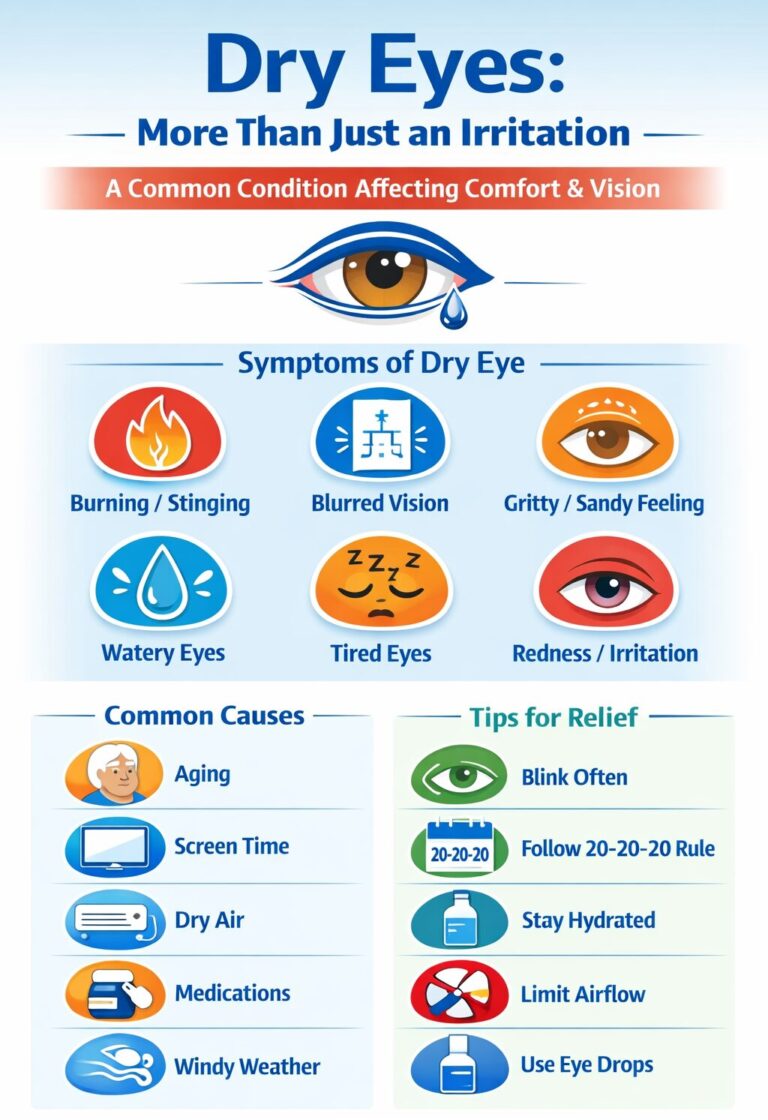
Dry eye occurs when your eyes don’t produce enough tears or when the tears evaporate too quickly. Healthy tears are essential for keeping the surface of your eyes smooth, comfortable and well protected. When the tear film becomes unstable, symptoms can develop throughout the day.
Common symptoms of dry eye include:
- A burning or stinging sensation
- Gritty or sandy feeling in the eyes
- Redness or irritation
- Blurred vision that comes and goes
- Watery eyes (a common response to dryness)
- Tired eyes, particularly after reading or using digital devices
Several factors can contribute to dry eye, including age, prolonged screen use, air conditioning, indoor heating, windy weather, certain medications and some health conditions. During winter, dry eye symptoms often become more noticeable due to colder air outside and dry heated air indoors.
There are simple steps you can take to help manage dry eyes:
- Blink regularly, especially when using digital devices
- Follow the 20‑20‑20 rule by looking 20 feet away every 20 minutes for at least 20 seconds
- Stay well hydrated
- Avoid direct airflow from heaters, fans and air conditioners
- Use preservative‑free lubricating eye drops if recommended by your optometrist
If your symptoms persist, it’s worth having your eyes assessed. Dry eye is a complex condition, and the most effective treatment depends on identifying the underlying cause. At Bridge Eye Care, we can evaluate the health of your tear film and eyelids and recommend a personalised treatment plan to help improve your comfort and maintain the long‑term health of your eyes.