Sunglass Lens Tints
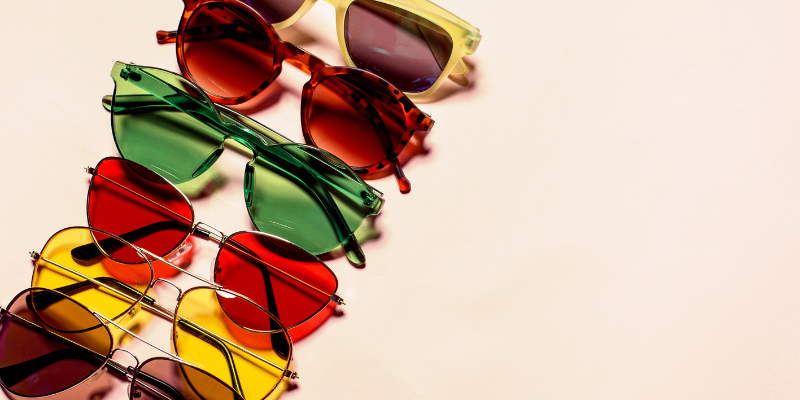
Of course, we love sunglasses because they protect your eyes from the damaging UV rays. We also love them because they come in so many shapes and colours they can help define your own personal style. Not only the sunglass frames are a statement of fashion or your lifestyle but so too are the sunglass lens tints!
Some sunglasses tints enhance the colours you see, making them appear more vivid. Some block light, reduce glare, and enhance acuity and contrast. Some however can distort colour so not all tints are right for all occasions. So when choosing coloured lenses, be sure to consider your lifestyle, such as daily work and recreational activities, and how and when you plan to use your sunglasses. But don’t worry – We can help you do this!
Grey is a neutral colour that absorbs the light spectrum evenly. This means it is a very comfortable tint to look through. Grey-tinted lenses make them great for all-purpose use, such as driving. It can also be great for outdoor activities such as running or cycling.
Brown or Dark Amber tints block blue light to heighten contrast and visual acuity. So, think of wearing these during activities like golf or baseball, where you need to make out small objects at a distance. Or for fishing (especially in waters with grassy bottoms), hunting, skiing and water sports.
Green coloured lenses also help provide contrast by filtering out some blue light. This reduces glare and eye strain, while offering high contrast and visual sharpness. Choose green for precision sports such as tennis, baseball, and golf. My personal favourite is a G-15 tint. This is a grey/green tint originally developed by the military. It blocks out most of the blue light offering colour contrast without as much colour shift as brown, whilst having the neutral comfort of the grey tint.
Rose/Red tints again increase contrast by blocking blue light. They have a reputation of being soothing to the eyes and more comfortable than others for longer wear-times. Be aware though, they may cause significant colour distortions.
Yellow, orange or gold sunglasses with light-coloured lenses excel in moderate to low level light conditions. They provide excellent depth perception, improving the visibility of objects, and making surroundings appear brighter. However, yellow, orange or gold sunglass lenses may distort colour and remember if the lighting conditions are too low, like with night driving, they may actually reduce your acuity. Choose yellow shades for snow activities and indoor ball sports or playing sports under lights.
Confused yet?? Start with an eye exam. Due to sunglasses reducing the light entering your eye, even a small amount of refractive error can make a big difference in giving you the clearest, most comfortable vision when wearing sunglasses. We can also help you navigate not only what lens type will assist you with your visual tasks but also what tint will enhance your lifestyle!